
Europe Must Lead the World Toward Peace
An international conference entitled “Europe – Leading the World Toward Peace” was held in Osijek and Vinkovci, from 24 to 26 October 2025, organised by the Croatian Pan-European Union in co-operation with the International Pan-European Union.
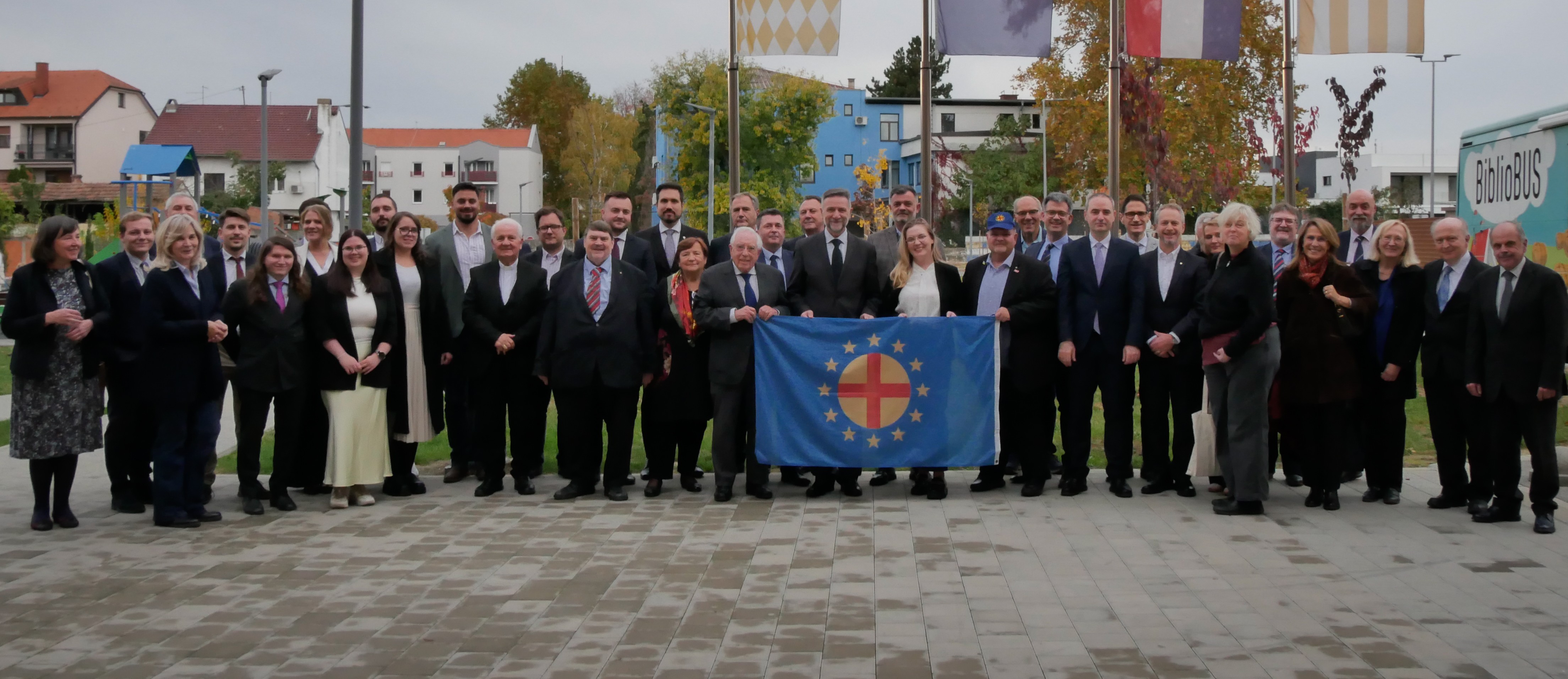
The conference brought together more than 80 representatives from 13 European countries, alongside officials from all levels of Croatian government, as well as members of the academic community, the diplomatic corps, and the Church.
In their addresses, the speakers emphasised that Europe – founded as a project of peace – must, even in these challenging times, continue to champion peace as humanity’s highest ideal, while remaining ready to defend itself when necessary.
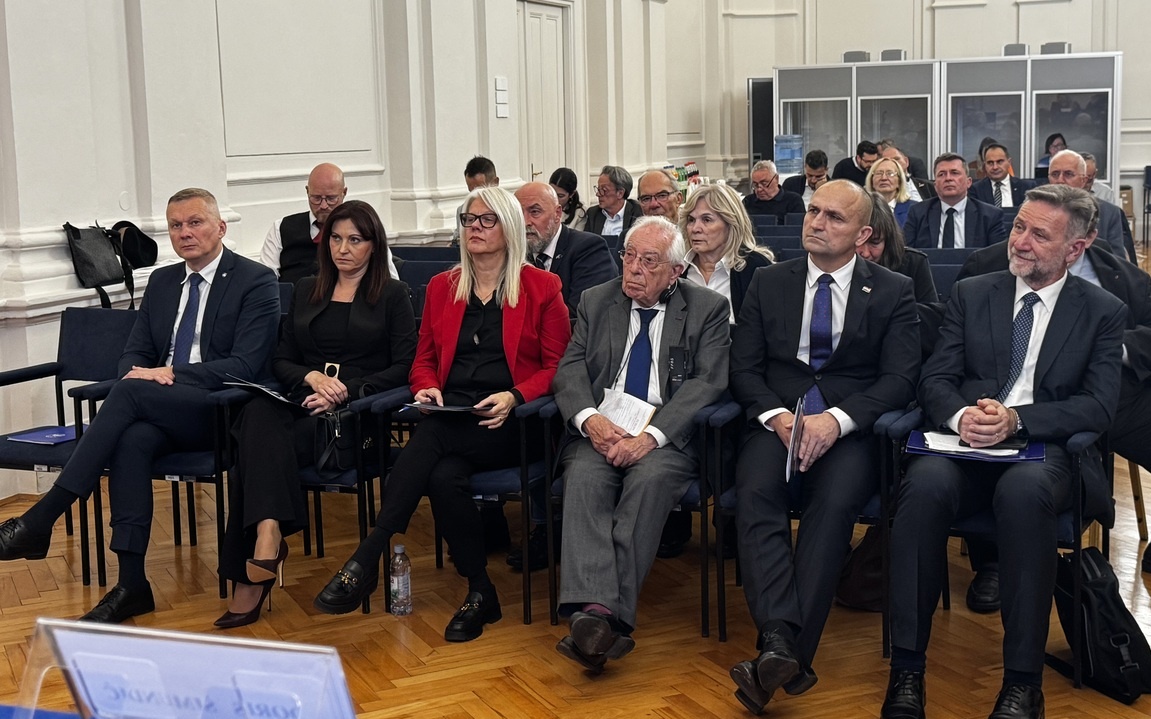
The President of the International Pan-European Union, Pavo Barišić, stressed that “Europe has a responsibility to act as a global power for peace”, drawing attention to the ongoing global conflicts and the need for responsible defence and the strengthening of European security. He concluded that “Europe stands at a crossroads in history and must once again affirm its mission as the world’s leading force for peace and stability,” recalling that for over a century the Pan-European movement has promoted the idea of a united and peace-building Europe.
Norbert Eschborn, Director of the Konrad Adenauer Foundation Office for Croatia and Slovenia, noted that the European integration of the last century had shown how “countries that cooperate do not enter into conflict.” He underlined that “Europe’s greatest strength lies in its ideals – democracy, peace, and prosperity”, adding that peace is not a final destination but a direction requiring constant dialogue and cooperation.
Speaking on behalf of the Archdiocese of Đakovo-Osijek, Stjepan Radić thanked the organisers for holding the conference in the seat of the archdiocese and metropolitan see. He recalled that the Catholic Church has always warmly supported the European ideas of unity and peace.
On behalf of the City of Osijek, Tihomir Florijančić, President of the City Council, welcomed the participants, emphasising that Osijek is a multi-ethnic city with 24 national minorities, a true regional centre and a symbol of coexistence.
The Prefect of Osijek-Baranja County, Nataša Tramišak, stated that Europe had been – and must remain – a leader of peace, and that Croatia, having experienced both war and reconstruction, deeply values the importance of peace. She pointed out that Slavonia still demonstrates how, through perseverance and unity, peace can be rebuilt and preserved.
Alain Terrenoire, Honorary President of the International Pan-European Union, reminded participants that peace did not come by itself but was the result of the effort and dedication of generations. He called upon all Pan-Europeans to continue being “strong advocates of peace, guided by the ideals of Count Coudenhove-Kalergi.”
Vanda Babić Galić, Special Adviser to the Minister of Foreign and European Affairs, stressed that the Pan-European Union, as the oldest European movement, had always carried the important mission of reviving faith in the European project and the spirit of solidarity. She underlined that “Europe without culture would not be a civilisation, but merely a market,” and that young Europeans should be the bearers of continuity for Europe’s founding ideals.
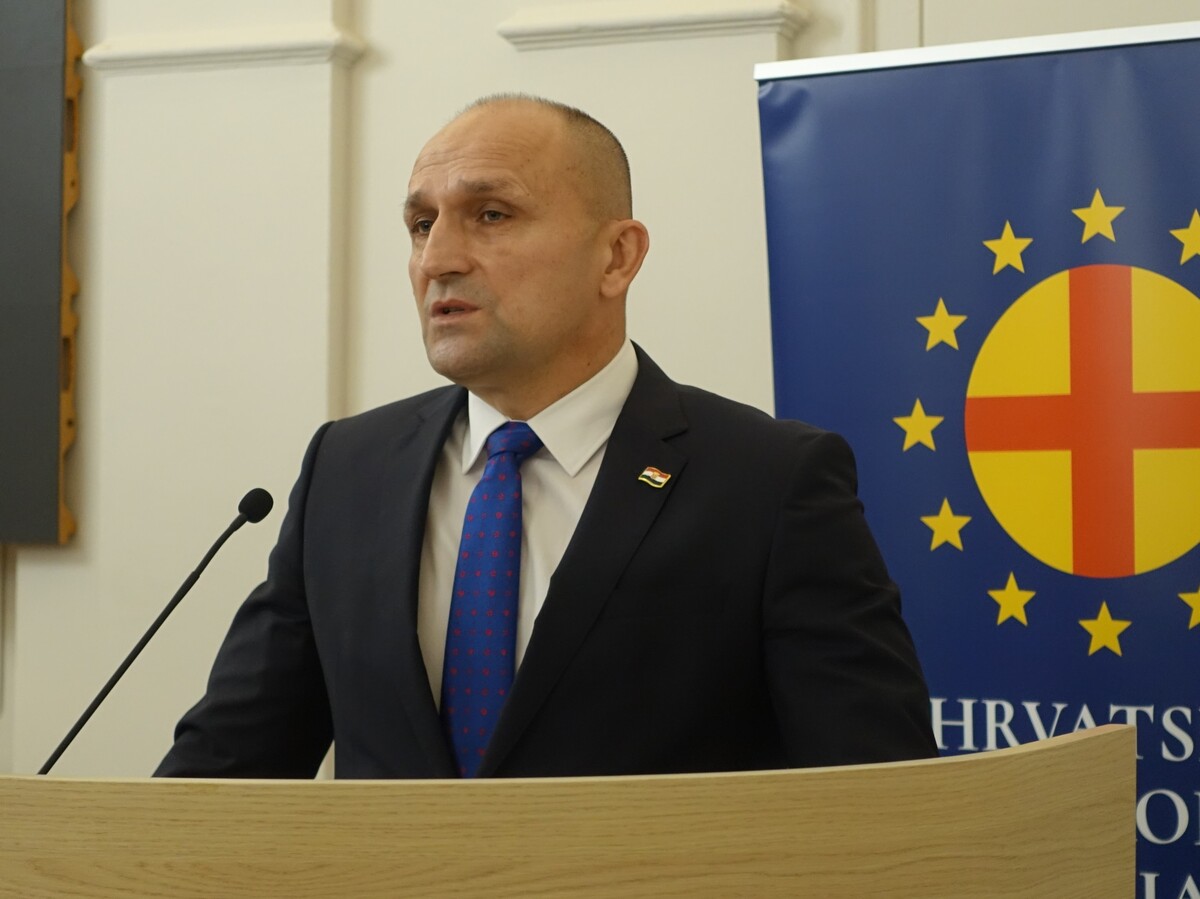
Deputy Prime Minister and Minister of Defence Ivan Anušić addressed the changed security circumstances and the need for a renewed, responsible approach to defence. He emphasised that “security cannot be taken for granted” and that Europe must develop its own defence industry and capabilities, including cyber security. He added that “in Ukraine, we were defending Europe itself,” and that both Croatia and the EU must take greater care of their defence and strategic autonomy.
MEP Karlo Ressler pointed out that peace could no longer be taken as self-evident, and that Europe must remain united in defending its values. “Europe can hardly be secure if any of its members is not secure,” he said, stressing that investment in defence must be strategic and prudent.
In a video message, MEP Davor Ivo Stier underlined the symbolism of holding the conference in cities that had experienced war and reconstruction, reminding that sustainable peace begins with individuals and local communities. He noted that the European Union is a unique historical achievement – not only an economic and political union but also a community of values, and that Croatia, having experienced war, actively contributes to European peace missions and supports Ukraine.
MEP Tomislav Sokol spoke about the need to strengthen Europe’s defence and self-reliance, stating that “Europe is strong enough to take responsibility for its own security” and must reduce dependence on other powers in key sectors – from defence to pharmaceuticals.
Zlatko Kramarić, Ambassador of the Republic of Croatia to Albania, referred to the challenges Europe faces amid the current crisis, stressing that such periods are a test of resilience and of the values that Europe represents.
Honorary President of the Croatian Pan-European Union, Mislav Ježić, concluded that in times of global tension, wisdom and consistency in promoting peace are more essential than ever. He recalled that the European Union received the Nobel Peace Prize in 2012, and that one of its founding fathers, Robert Schuman, is currently in the process of beatification – a testament to how deeply peace ideals are rooted in the European spirit.
Among the other speakers were Đuro Topić, Prime Minister of the Posavina Canton in Bosnia and Herzegovina; Ilija Cota, President of the City Council of Vinkovci; Marina Hodak Domaćinović, representing Vukovar-Syrmia County; Alexandru Nazare, President of the Pan-European Union of Romania and Romanian Minister of Finance; Walburga Habsburg Douglas, Vice-President of the International Pan-European Union; Bernd Posselt, President of the German Pan-European Union; Ihor Zhaloba, President of the Pan-European Union of Ukraine; Gianna Di Danieli, President of the Pan-European Union of Italy; Éric Campion, President of the Pan-European Union of France; Arber Prenaj, President of the Pan-European Union of Kosovo; Andrej Lepavcov, President of the Macedonian Pan-European Union; Gordana Đurović, President of the Montenegrin Pan-European Union; Pavao Nujić, President of the Osijek Branch of the Croatian Pan-European Union; Toni Ivkošić, President of the Croatian Pan-European Youth; Joséphine Staron, President of the French Pan-European Youth; Isabella Schuster-Ritter, President of the German Pan-European Youth; Zvonimira Jakić, Secretary-General of the Pan-European Union of Bosnia and Herzegovina; Dario Plavčić, President of the Pan-European Youth of Bosnia and Herzegovina; and Petar Raičević, Member of the Presidency of the Pan-European Youth of Montenegro.
The opening of the conference was moderated by Vanja Gavran, Secretary-General of both the International and Croatian Pan-European Unions, while the panel discussions were chaired by Doris Šimundić and Marija Barić Đurđević, Vice-Presidents of the Croatian Pan-European Youth.
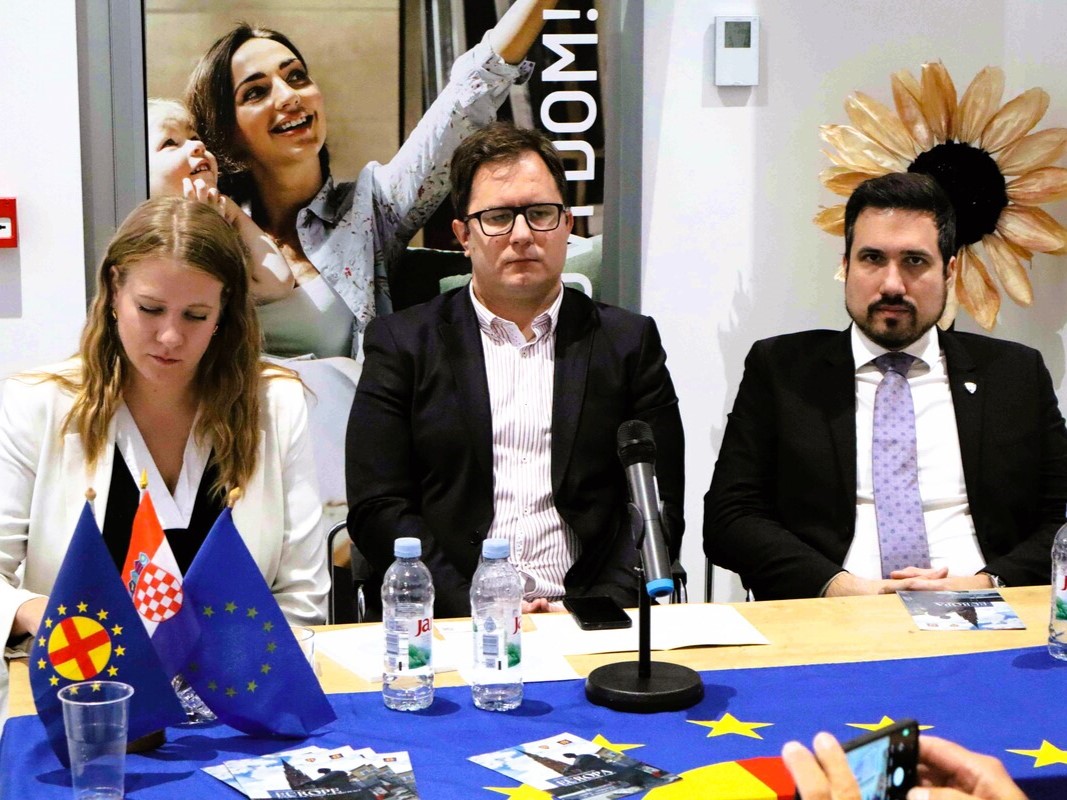
In the afternoon session on Saturday, a meeting of the IPEU Presidency Council was held in Vinkovci, followed by a guided city and museum tour and a musical performance by students of the Vinkovci Music School.
The conference concluded on Sunday, 26 October, with a solemn Holy Mass in the Co-Cathedral of Saints Peter and Paul in Osijek, celebrated by Monsignor Franjo Komarica, Bishop Emeritus of Banja Luka.
Programme (EN) (PDF)