
On Strengthening Europe in Andechs
In cooperation with the Bavarian State Chancellery, the Pan-European Union Germany held the 66th Andechs European Day on 17 and 18 October 2026 under the title “Can the Small Countries Save Europe?”.
On behalf of the monastery, Father Valentin Ziegler OSB welcomed the 120 guests from 12 nations to Bavaria’s Holy Mountain. In his spiritual address, he referred to the Evangelist Luke, whose feast day would be celebrated on Sunday. Luke, he explained, had followed Jesus as a realist and had also addressed suffering and poverty.
In the view of Bernd Posselt, President of the Pan-European Union Germany, the “materialist ideologies” of nationalism, Marxism and capitalism were destroying European integration and the democratic rule of law. As a counterforce, he therefore called for a revival of Catholic social teaching, whose origins can be traced to the theses developed in Haid, Bohemia, in 1883. These ideas subsequently found their way to Rome and into the first papal social encyclical, Rerum novarum, issued in 1891.
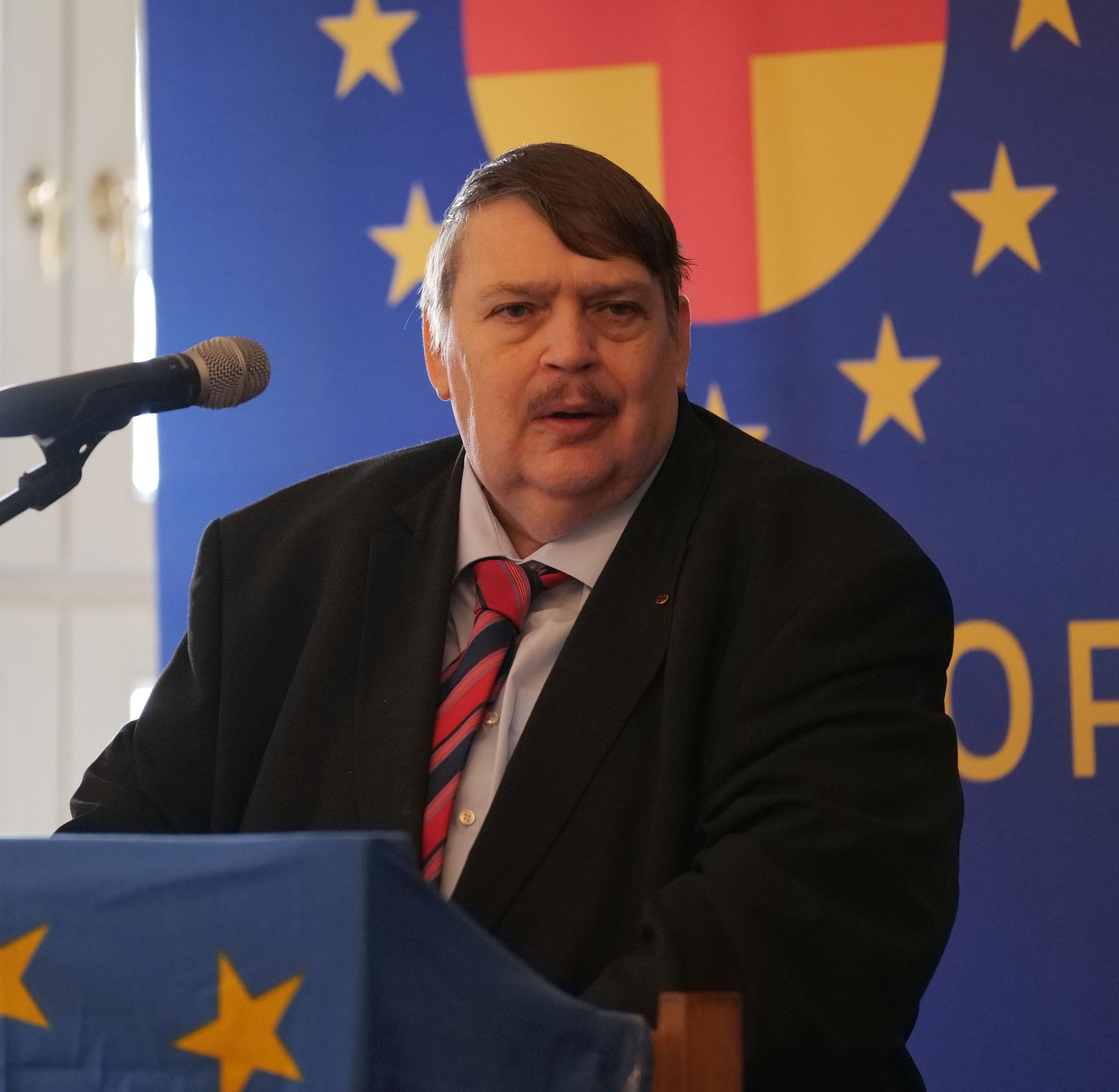
Europe was currently threatened both by fragmentation and by centralism. This centralism, however, was not European in character; rather, it was the nation-state centralism that had prevailed in the nineteenth and twentieth centuries, weakening Europe while suppressing the regional and local levels of governance.
Together with the Freiburg School of economics, which emphasises the dynamics of competition, and Protestant social ethics, Catholic social teaching forms the intellectual backbone of the current EU Treaties and of efforts to renew Europe’s economic and social model. This model differs fundamentally both from China’s collectivism and from the extreme individualism of the United States, which is also shaped by the fantasies of global domination entertained by high-tech billionaires. From a European perspective, the common good is central. This means working for harmonious coexistence even when doing so brings no personal advantage and may even entail disadvantages: “Without commitment and a willingness to make sacrifices, a community such as the EU cannot survive in an increasingly dangerous world.”
Subsidiarity and solidarity must be kept in balance: the former means taking responsibility for oneself, while the latter entails active assistance for people in need. Personalism, a central concept of Catholic social teaching, emphasises human dignity and the autonomy of each individual, while also recognising that human beings are social creatures who can fulfil their potential only within a community and bear responsibility for it.
At a panel entitled “Families, Farmers and Small and Medium-Sized Enterprises – Building Blocks of a Free Europe”, the discussion was lively, with contributions from Munich city councillor Alexandra Gaßmann, Chair of KINDERreich in Bayern e.V.; Marlene Mortler, farmer and former Member of the European Parliament; and Stefan Richter, head of the Saxon Bakers’ Guild.
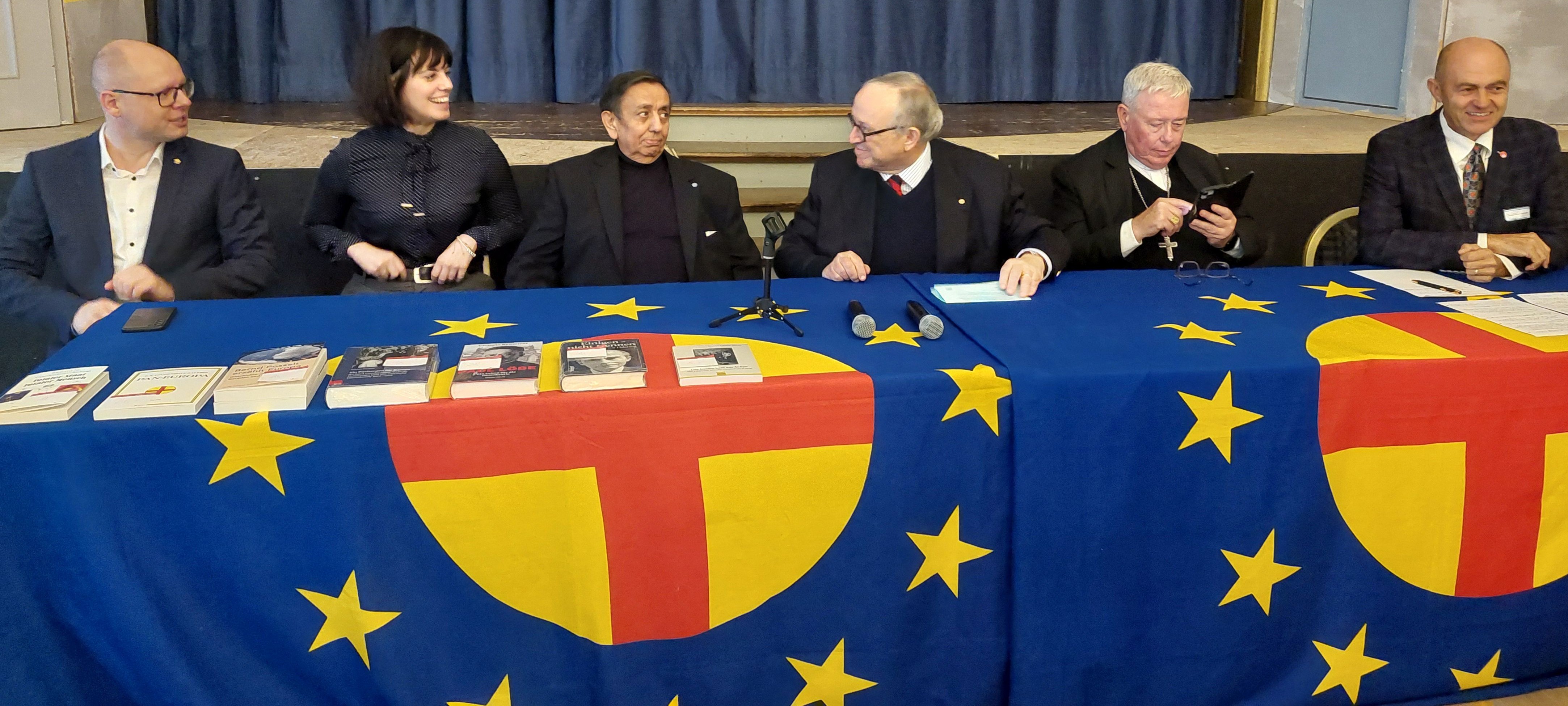
The final panel, devoted to ethnic groups and regions, was moderated by Dirk Voß, Vice-President of the International Pan-European Union. He diagnosed a “dysfunctionality of the nation-state” in Europe: it was too small to play a significant role in the world and protect its citizens, yet too large and abstract to provide them with a sense of home.
The Archbishop of Luxembourg, Cardinal Jean-Claude Hollerich, praised Pope Leo XIV’s visit to France as a powerful impetus for Europe and for Christian renewal, including in highly secularised countries in Western Europe. The bishops of the dioceses bordering Metz—where Robert Schuman, one of the European Union’s most significant Christian founding fathers, had spent much of his life—had been given the opportunity to nominate ten young people each to attend the encounter, thereby supporting their engagement with Europe.
Erich Schneeberger, Chairman of the Bavarian Sinti and Roma, emphasised that the Sinti had lived in the German-speaking world for 700 years and had been strongly influenced by its culture: “We have been German citizens for a very long time and abide by German laws and customs.”
Nadja Polzer, Deputy Chairwoman of the Community of Carinthian Slovenes, reported that Austria had decided on 7 July this year to revise its legislation on ethnic groups.
Richard Neugebauer, President of the National Assembly of German Associations in the Czech Republic, explained that of the 3.2 million Sudeten Germans, 300,000 had remained after the expulsion following the Second World War, either because their professional skills were needed or because they were no longer admitted to the occupation zones controlled by the victorious powers.
Dawid Statnik, Chairman of the Federation of Lusatian Sorbs (Domowina), also affirmed the importance of European institutions for ethnic groups and minorities, which predated the nation-states.
An evening programme of Bavarian folk music, performed on two zithers, guitar and double bass by the Weberhof-Musi ensemble, whose members appeared in traditional dress and hats, evoked Europe’s roots in its local communities.
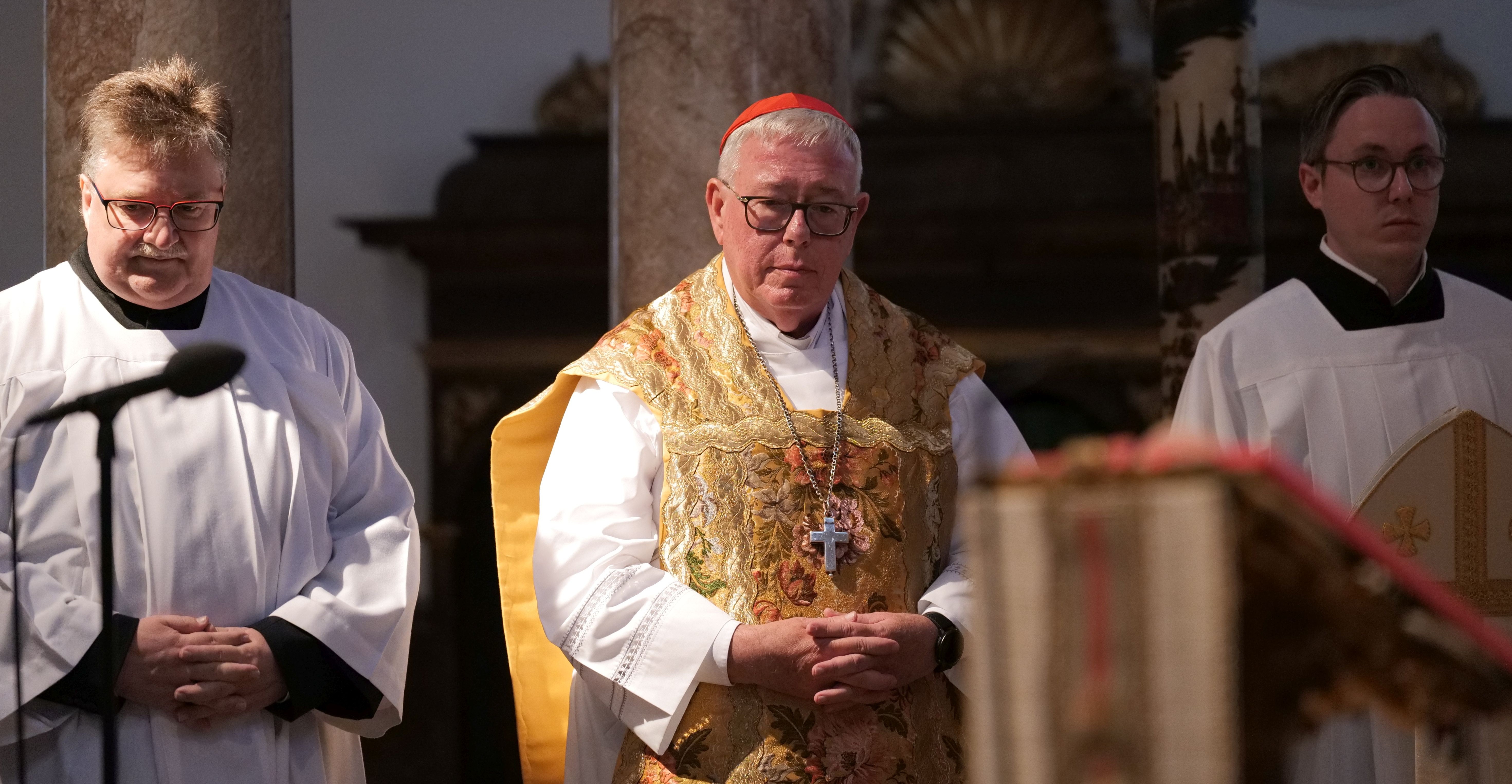
The Sunday service in the pilgrimage church was celebrated by the Archbishop of Luxembourg, Cardinal Jean-Claude Hollerich, who stressed that human beings owe God not only worship and a living relationship, but also an unequivocal love of their neighbour.
Programme (DE) (PDF)
Press Release (DE) (PDF)