
Cooperation in the Danube Region – Pan-European Days in Ingolstadt
The 52nd Pan-European Days, organised by the Pan-European Union Germany and the Pan-European Youth Germany, were held from 12 to 14 June 2026 in the Bavarian Danube city of Ingolstadt and the neighbouring historic Celtic settlement of Manching.
Under the overarching theme “PANEUROPA – Union or Collapse!”, the conference, attended by participants from across Europe, focused on cross-border cooperation among the Danube countries from Germany to the Black Sea, as well as on the major political challenges confronting Europe today.
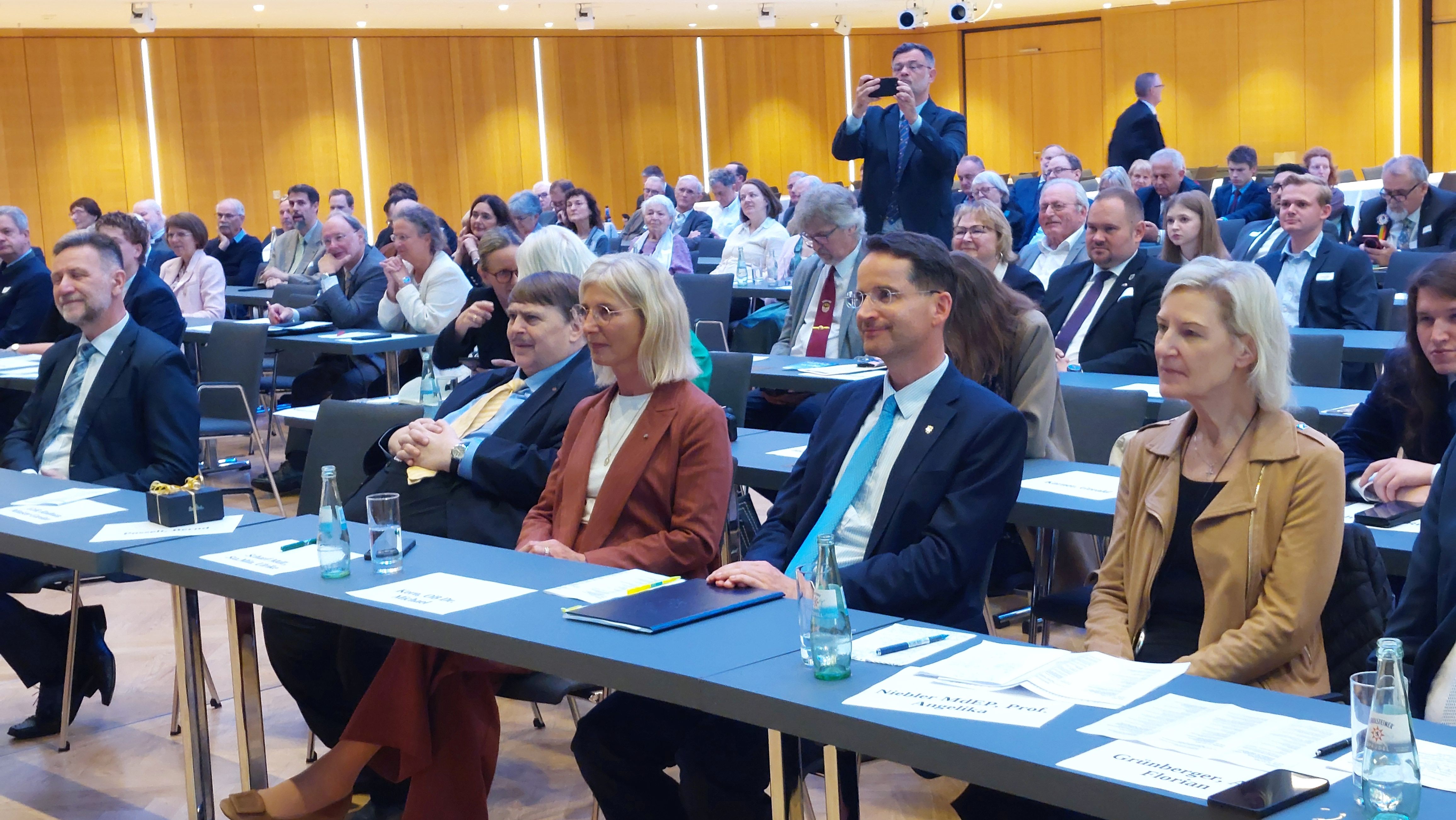
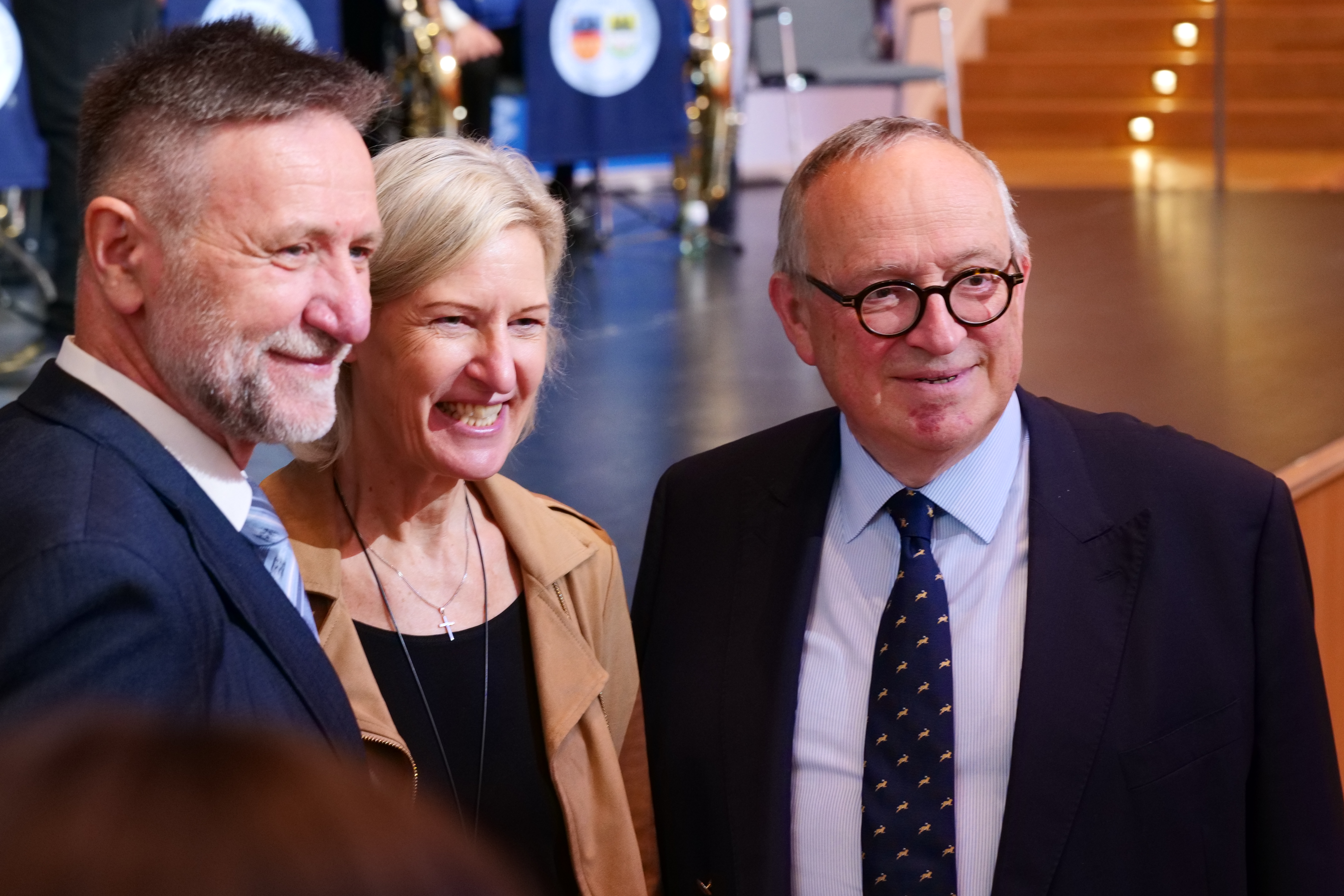
The ceremonial opening, held in the Grand Hall of the Maritim Hotel in Ingolstadt and attended by participants from fourteen countries, was moderated by Johannes Kijas, Federal Executive Director of the Pan-European Union Germany. The event was accompanied by lively musical performances from across the Danube region by the Transylvanian-Banat Brass Band of Ingolstadt.
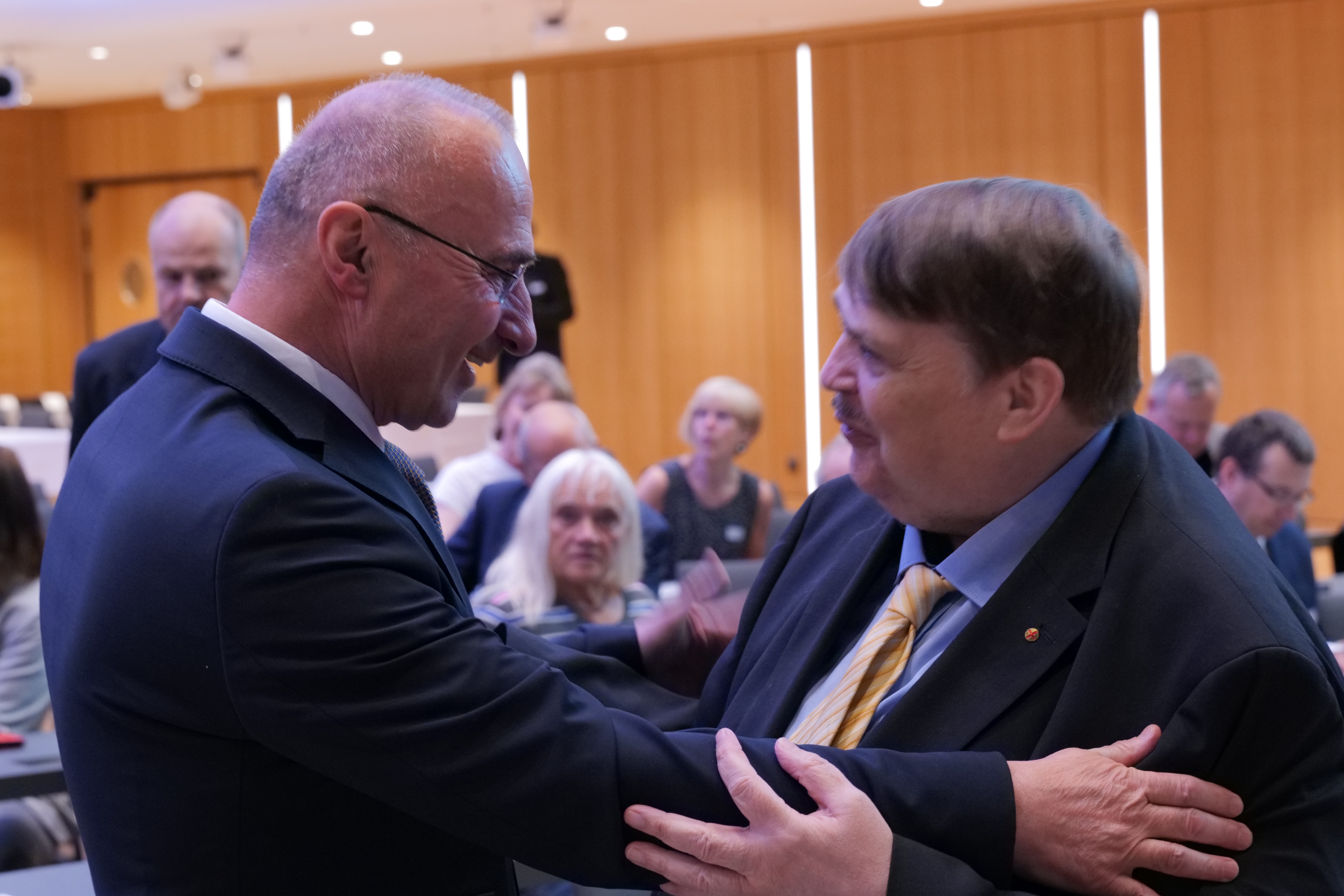
Croatia's Minister of Foreign and European Affairs and committed Paneuropean, Gordan Grlić Radman, emphasised that the EU Strategy for the Danube Region makes a vital contribution to forging a common European identity. This, he noted, applies not only to the EU Member States along Europe's longest river but also to the candidate countries. Enlargement of the European Union to include the countries of South-Eastern Europe would strengthen stability across the entire continent. Croatia, he said, firmly supports the candidate countries in advancing the rule of law and aligning themselves with the European Union's Common Foreign and Security Policy. Grlić Radman praised the Pan-European Union as the oldest movement for European unification, recognising that Europe is shaped not only by its institutions but also by its regions and its peoples.
Speaking on behalf of Bavaria, one of the Danube regions, Deputy Minister-President Ulrike Scharf paid tribute to the Bohemian Count Richard Coudenhove-Kalergi, who founded the Pan-European Union more than a century ago: “He believed in unity rather than division. His message was simple yet powerful: Europe will unite – or Europe will fail.” Today, she stressed, the European Union needs guidance more than ever before: “as a community of values, a community of freedom and a community of shared destiny.”
To prolonged applause from the Paneuropeans, Patrik Schwarcz-Kiefer, Hungary's representative in the European Committee of the Regions, emphasised his country's new beginning following the recent parliamentary elections: “Hungary is back in Europe! With Péter Magyar's decisive electoral victory, the Hungarian people have reaffirmed that their country should continue along the European path first chosen by its founding King, Saint Stephen, and his Bavarian consort, Gisela.”
Representing the Governor of Upper Austria, Thomas Stelzer, was Florian Grünberger, a member of the Upper Austrian Parliament. He described his province as “a strong economic centre and a hub for cross-border cooperation in the Danube region”, building bridges above all with Bavaria and Bohemia. He noted that the EU Strategy for the Danube Region defines development objectives across eleven priority areas, under which more than 250 projects involving Austrian partners are being implemented through the Interreg programmes.
Prof. Angelika Niebler, Member of the European Parliament for Upper Bavaria and Chair of the CSU Group in the European Parliament, welcomed the outcome of the Hungarian elections, as did Patrik Schwarcz-Kiefer. She argued that the result would bring to an end the harmful deadlocks to which the entire European Union had been subjected during the final years of Viktor Orbán's government. As President of the Bavarian Economic Advisory Council, she recalled having organised a congress in Passau dedicated to strengthening opportunities for small and medium-sized enterprises in the Danube–Vltava region.
The President of the Pan-European Union Germany, Bernd Posselt, quoted the Spanish philosopher and Paneuropean Salvador de Madariaga, who described the Rhine and the Danube as Europe's two “rivers of destiny”. Along their banks, he observed, the first Europe—the Celtic Europe—had taken shape. Throughout history, there had been a constant exchange between these two great river regions. The Habsburgs, for example, had originally come from Alsace and travelled from the Rhine via Switzerland to Vienna, from where they established the supranational Danubian Monarchy. Although today's European capitals—Strasbourg, Luxembourg and Brussels—lie within the Rhine basin, the first impulses towards European unification had come from Vienna, where Richard Coudenhove-Kalergi issued his first appeal for European unity in 1922 and, exactly one hundred years ago, the first Pan-European Congress in history was commemorated.
Posselt also criticised the growing tendency in Berlin to rely on so-called “coalitions of the willing” rather than on the democratically legitimised institutions of the European Union. He pointed out that recent talks on the future of Ukraine had been held in London while key EU Member States such as Poland and Romania had simply been left out. Kaja Kallas of Estonia, the EU's High Representative for Foreign Affairs and Security Policy, is one of Europe's foremost experts on Russia, he argued, yet for precisely that reason she has been systematically sidelined and undermined by the nation states.
Sebastian Roloff, Chairman of the Bavarian SPD and the SPD parliamentary group's spokesperson on economic policy in the German Bundestag, stressed that the Pan-European movement had recognised from its very foundation in 1922 that “Europe is the answer!” Yet, he argued, the wider public still fails to appreciate the European Union's true potential: “450 million citizens, one of the world's largest economies and the strongest community based on the rule of law that has ever existed.”
The President of the International Pan-European Union, Prof. Pavo Barišić, referred to the British historian Arnold Toynbee and his “well-known conclusion that every civilisation advances or survives only insofar as it responds successfully to the challenges posed by nature, neighbouring civilisations or profound social change.” Today, he observed, Europe once again faces a question of survival, just as it did in the aftermath of the First World War. When the Pan-European movement was founded, European unity existed only as a political vision. Today, however, the European Union has the opportunity “to take its place among the leading powers of the emerging multipolar order.” To achieve this, it is indispensable to further develop and strengthen the European Union's Common Foreign and Security Policy. The Pan-European Union therefore supports the efforts of the European Commission to enable Europe to assume full responsibility for its own defence.
The President of the Pan-European Union Ukraine, the internationally renowned historian Prof. Ihor Zhaloba, spoke of the suffering and loss endured by Ukraine's civilian population as well as by the soldiers on the front line, with whom he himself had volunteered to serve for three years. He concluded with an urgent appeal for Europe to provide substantial support to Ukraine, particularly in the months ahead.
Dirk H. Voß, Chairman of the Pan-European Union Bavaria and Vice-President of the International Pan-European Union, observed that the European Union is navigating increasingly turbulent waters. Threatened in the east by the war criminal Vladimir Putin, it is also confronted in the west by the United States, “which is recklessly dismantling the rules-based international order because a dangerous political sect, led by the would-be dictator Trump, has taken both the venerable Republican Party and the United States itself hostage.” At the same time, he argued, the People's Republic of China has long been seeking to bring much of the world into dependence through economic leverage. The only adequate response, he maintained, lies in consistently transcending the nation state in Europe and completing the European Union as a strong, sovereign and independent global power fit for the modern age.
During the visit to Airbus in Manching, Matthias Nitsche, Sales Director for Military Aircraft, welcomed the Paneuropeans. He sought to allay concerns arising from Chancellor Friedrich Merz's announcement of the termination of the FCAS project. He explained that the programme is not confined to the development of a single combat aircraft but encompasses an integrated system of manned and unmanned aerial platforms, many elements of which will continue to offer considerable scope for further development. “Our company is European and Franco-German by its very DNA, and it will remain so. No one should doubt our commitment to European partnership.”
The panel discussion, moderated by Bernd Wolsky, featured Thomas Erndl, CDU/CSU spokesperson on defence policy in the Defence Committee of the German Bundestag; Brigadier (Ret.) Gerald Karner of the Austrian Armed Forces General Staff; Jan Tombiński, Ambassador of Poland to Germany; Brigadier General Christian Friedl, Commandant of the Army Engineer School in Ingolstadt; and Carlos Uriarte Sánchez, Professor at Rey Juan Carlos University in Madrid and President of the Pan-European Union Spain.
Programme (DE) (PDF)
Press release (DE) (PDF)